
McGill University
We helped McGill University dynamically and accurately match individuals experiencing homelessness to shelters in real-time, significantly improving the speed, accuracy, and quality of the placements.
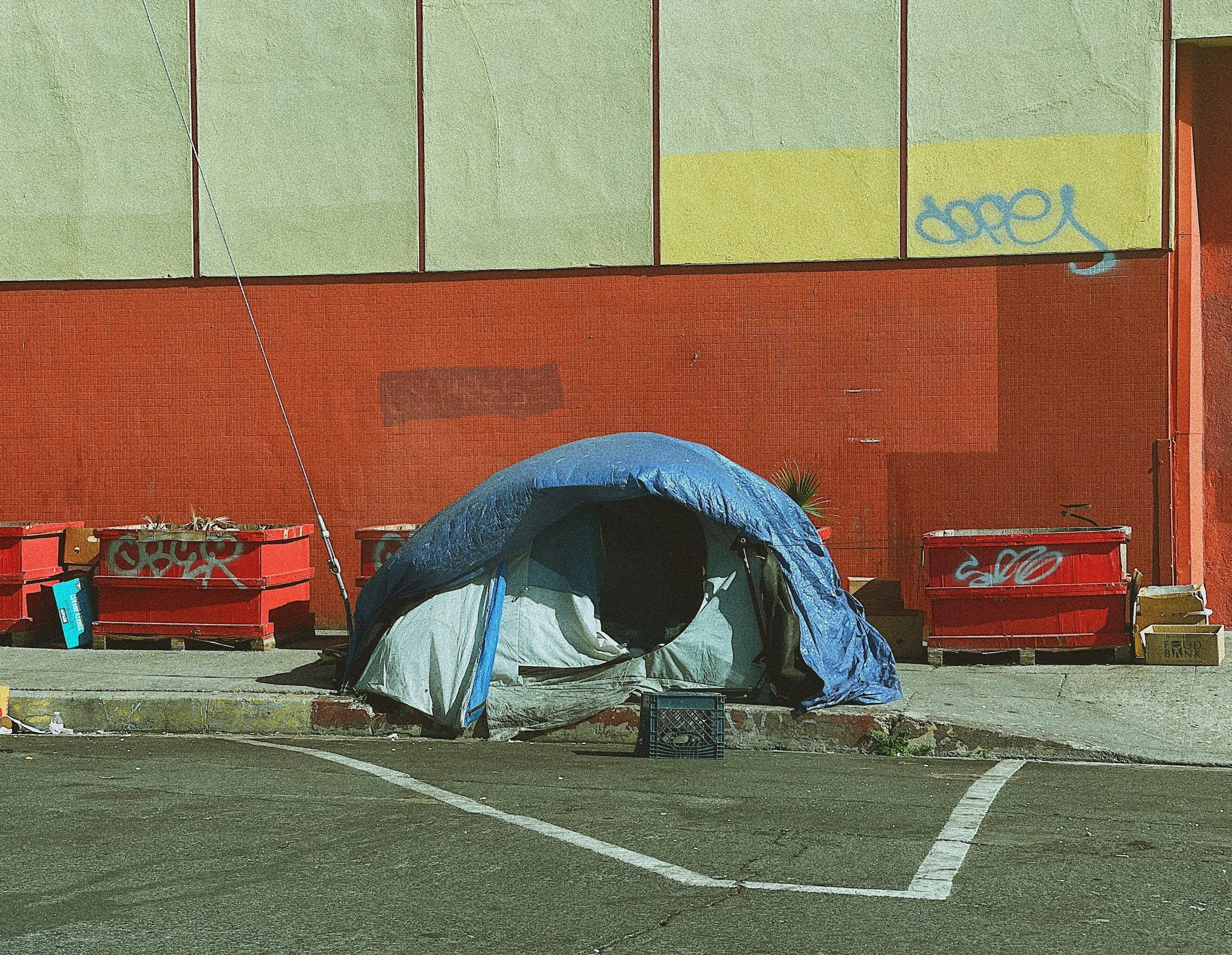
In urban centers across the globe, homelessness presents a complex challenge, affecting a wide range of individuals each with unique needs. Traditional methods for assigning these individuals to shelters and transitional housing have often been inefficient and poorly suited to individual circumstances.
Despite the often ambitious efforts and considerable resources allocated to solve urban homelessness, traditional methods of shelter assignment remain plagued by inefficiencies. These methods often result in significant mismatches between the individual needs of the unhoused and the capabilities and services provided by shelters.
This misalignment can lead to prolonged periods of homelessness, underutilized resources, and a general lack of effective support for vulnerable populations. Working with McGill University, our challenge was to devise a solution that could dynamically and accurately match individuals experiencing homelessness to shelters in real-time, significantly improving the speed, accuracy, and quality of the placements.
It has been estimated that at least 235,000 Canadians experience homelessness at some point over the course of a year. These include disproportionate numbers of men, young adults who have gone through the youth protection system, Indigenous people, and LGBTQ-identifying people, among other subgroups.
As Founder and CEO of Thicket Labs, I worked with our CTO to set up a new R&D center in the province of Ontario, Canada and helped secure our first client, McGill University.
Activities
Established Thicket Labs R&D Centre in Thunder Bay and drove collaboration between US and Canadian teams to deliver a product that integrated research insights, technical development, and creative design, positioning the platform as a key tool for McGill’s outreach.
Led the initial creative vision for the development of a research-driven product interface, leading to a design that was aligned with the user experience goals and the storytelling needs of McGill University's homelessness research project.
Partnered with the CTO to secure the McGill contract, playing a key role in shaping the creative strategy that supported the research objectives and ensured that the product interface would effectively engage both academic stakeholders and the broader community.

Solution
Thicket Labs, leveraging its patented SaaS product and expertise in aiding organizations addressing complex challenges to meet and surpass their operational targets, created a solution that:
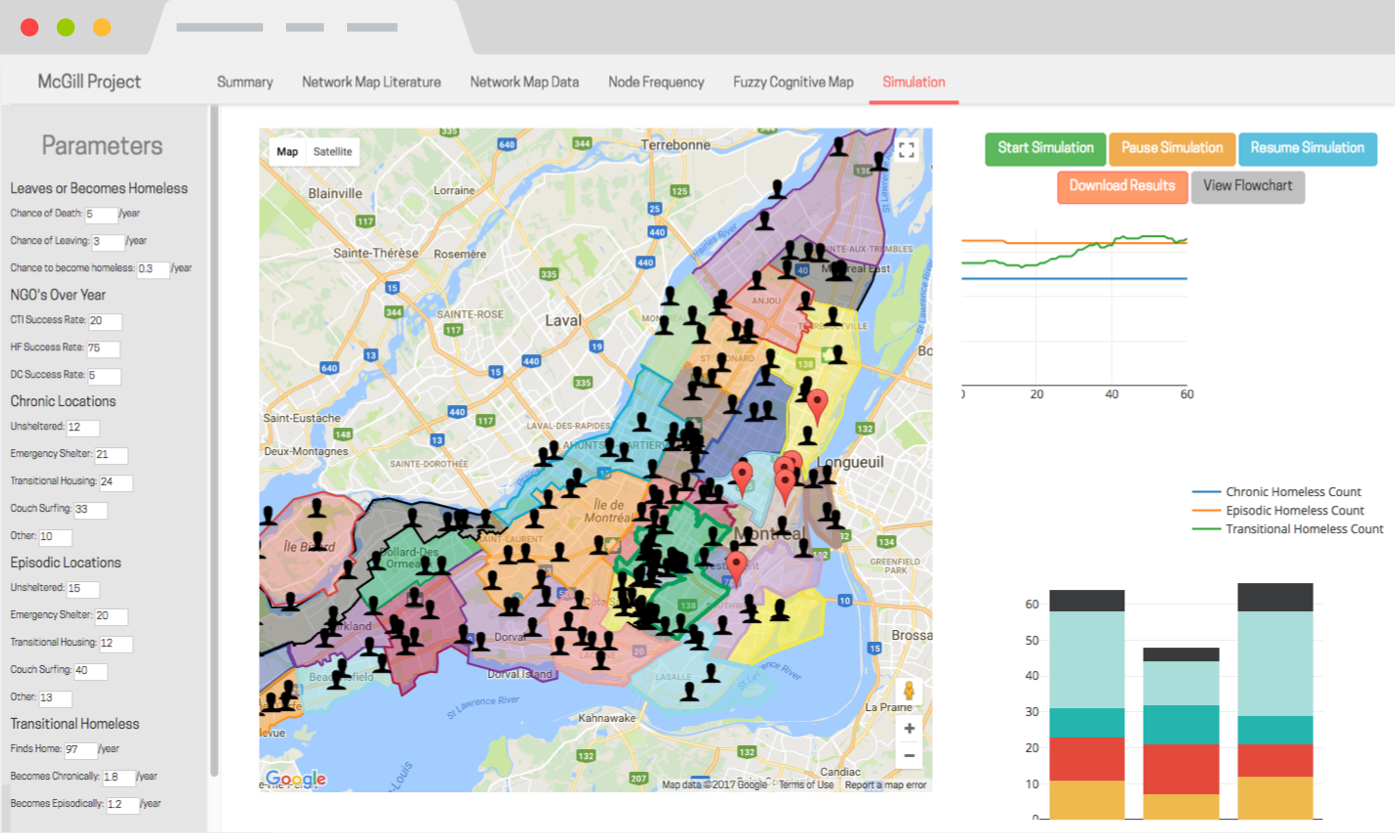
Provided real-time geotracking to monitor the locations of unhoused individuals and available shelters.
Utilized simulation algorithms to predict the outcomes of different assignment strategies, allowing administrators to make informed decisions quickly.
Process
Data Collection: Initiated by gathering comprehensive data from existing shelters and service centers.
Prototype Development: Designed and tested in a controlled environment before rolling out a pilot program.
Stakeholder Engagement: Continuous interaction with city administrators and shelter managers to tailor the platform according to local needs and constraints.
Results
Improved Efficiency: The technology reduced the time required for making shelter assignments.
Increased Accuracy: Optimized the suitability of shelter assignments to better than 96% of all suitable options, significantly improving user satisfaction and resource utilization.
Scalability: Demonstrated the platform's potential to be scaled to other cities, adapting to different urban contexts and needs.
Results
This collaboration led to a 96% optimal solution in the quality of homeless-to-shelter assignments and a significant improvement in time efficiency over the existing process. The success of the project prompted further consideration for broader application and highlighted the value of design-led technological innovation in addressing complex social issues.
The partnership between Thicket Labs and McGill University offered a new approach to addressing urban homelessness. By effectively utilizing technology to improve the efficiency and accuracy of shelter assignments, it provided a model that could be replicated in other municipalities looking to enhance their social service systems.
This project was completed by Thicket Labs, a data-driven design lab and technology company founded and run by Deepthi Welaratna prior to founding Tiny Little Cosmos.
